It's Over, Boys
Sorry Efin, sorry Ryab.
- RECEIVED
- EST READ
- 5 MIN
- CHANNEL
- ai / software-engineering / future
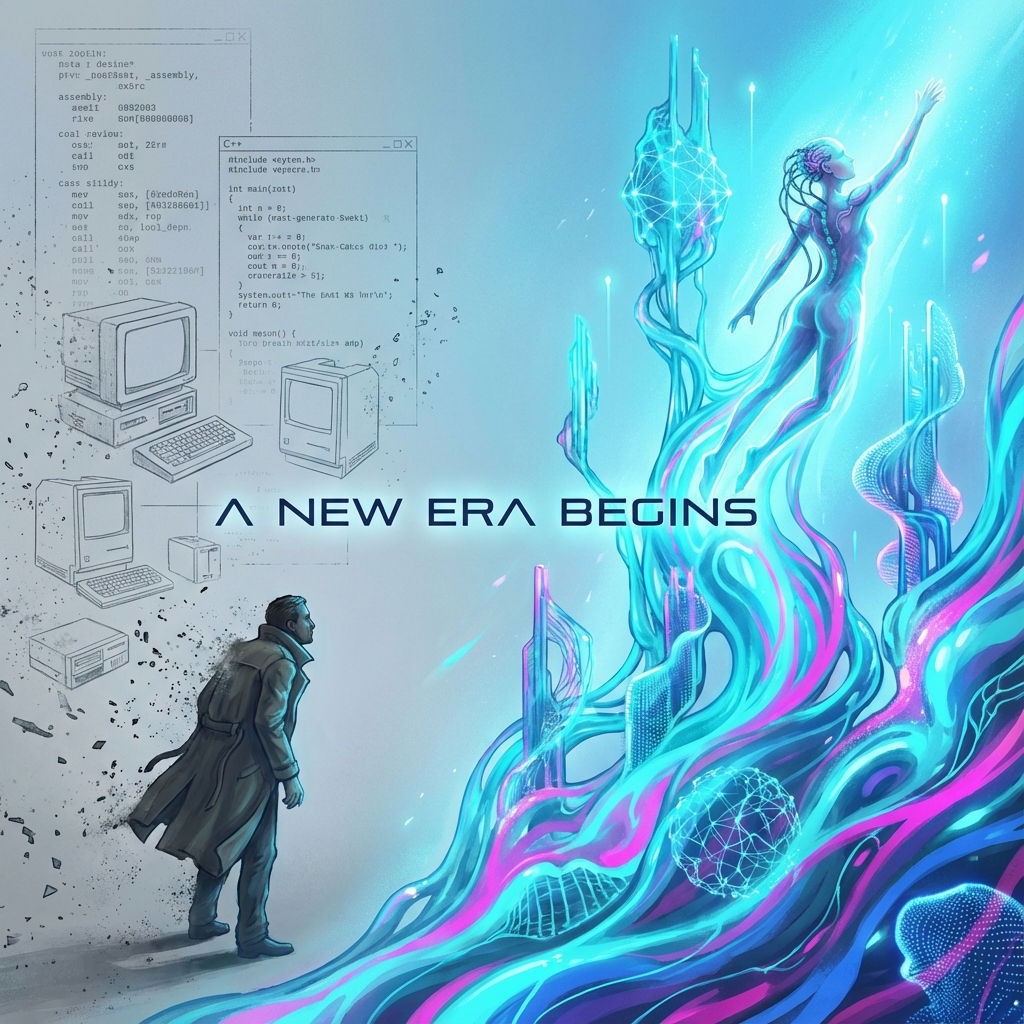
It's over, boys.
Not coding itself — that's not going anywhere. But coding as we knew it? The craft we spent years mastering? The identity we built around being "the person who can make the computer do things"?
That's done.
Two engineers walk into a bar
Let me tell you about Efin and Ryab.
Efin spent a decade becoming a backend wizard. Distributed systems. Database optimization. The kind of engineer who could look at a slow query and feel where the bottleneck was. He'd earned that intuition through thousands of hours of debugging, profiling, and staring at execution plans until his eyes crossed.
Ryab took a different path. Frontend specialist. CSS whisperer. The person you called when your layout broke in Safari and you'd already tried everything. She'd built her career on knowing the quirks — the weird edge cases that only exist because browsers were built by humans with deadlines.
Both of them are exceptional engineers. Both of them are watching their competitive advantage evaporate in real time.
The uncomfortable truth
Here's what's happening: the hard-won knowledge that used to take years to accumulate? It's being compressed into a prompt.
Efin's database intuition? An AI can now analyze query plans and suggest optimizations. Not perfectly — but well enough. And getting better every month.
Ryab's Safari edge cases? Documented, indexed, and retrievable in seconds. The tribal knowledge she accumulated through pain and suffering is now just... available.
This isn't about AI replacing engineers. It's subtler than that. It's about AI flattening the skill curve. The gap between "junior developer" and "senior wizard" is narrowing. Fast.
What we lose
Let's be honest about what's disappearing:
The craftsman identity. For years, being a developer meant being part of an exclusive club. We learned arcane languages. We memorized syntax. We suffered through configuration hell so others wouldn't have to. That suffering was a badge of honor.
Now? The barrier to entry is a conversation.
The debugging mystique. There was something almost magical about watching a senior engineer track down a bug. The intuition. The pattern recognition. The way they'd know where to look.
AI doesn't have mystique. It just has access to every Stack Overflow post ever written and the patience to try everything.
The gatekeeping. Yeah, I'm saying it. Part of our identity was being gatekeepers. We controlled access to a valuable skill. We decided who was "technical enough." That power is dissolving.
What Efin and Ryab do next
Efin could spiral. He could rage against the machines, insist that real engineering requires human intuition, and slowly become irrelevant while clinging to his identity.
Or he could adapt.
What if Efin's decade of experience isn't about knowing what to do, but knowing what matters? He understands systems at a level that lets him ask better questions. He knows which optimizations are worth pursuing and which are premature. He can smell architectural debt before it becomes a crisis.
AI can suggest query optimizations. It can't tell you whether those optimizations align with where the product is heading. It can't navigate the politics of convincing a team to pay down tech debt. It can't mentor a junior engineer through their first production incident.
Ryab has a similar choice.
She could keep memorizing browser quirks, fighting a losing battle against AI that will always have better recall.
Or she could lean into what AI can't do: understanding users. Why does this interaction feel off? What's the emotional journey of this page? How do we make this experience feel right in a way that no specification could capture?
The Safari bugs were never the point. They were just obstacles on the way to building something humans would love using.
The new game
Here's where we are: the old game rewarded knowledge accumulation. The new game rewards something else.
Taste. Knowing what's worth building in the first place.
Judgment. Understanding which AI suggestions are good and which are confidently wrong.
Communication. Translating between humans and machines, in both directions.
Speed. The ability to ship, iterate, and learn faster than ever before.
The engineers who thrive won't be the ones who resist. They'll be the ones who figure out how to be more effective when AI handles the parts that used to take all their time.
Sorry, Efin. Sorry, Ryab.
I don't write this with joy. There's genuine grief in watching an identity dissolve.
Efin and Ryab didn't do anything wrong. They played the game as it existed. They got good at it. They built careers and identities around skills that are now being automated.
That's not their fault. But it is their reality.
The engineers who came before us had to adapt too. Assembly programmers watched high-level languages take over. Mainframe experts saw the PC revolution make their expertise obsolete. This is just our turn.
What comes next
I don't know exactly what software engineering looks like in five years. Nobody does.
But I know it won't look like it did five years ago. The tools are too powerful. The pace is too fast. The old gatekeepers are losing their keys.
For Efin, for Ryab, for all of us who built our identities around being "the technical one" — it's time to figure out what we are when the machines can do the technical parts too.
It's over, boys.
And something new is beginning.
If you're reading this and feeling that knot in your stomach — yeah, me too. But I'd rather face it clearly than pretend it's not happening. The future belongs to those who adapt, not those who were right about the past.